















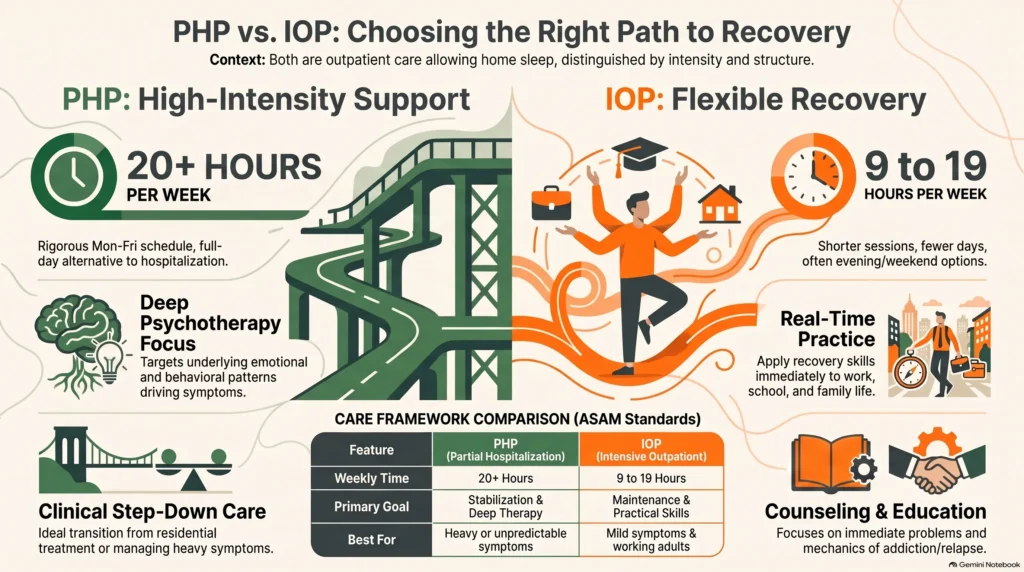
A Partial Hospitalization Program (PHP) provides at least 20 hours of structured clinical services each week, and an Intensive Outpatient Program (IOP) provides 9 to 19 hours [1].
Both are outpatient levels of care, so you sleep at home either way. What separates them is how much of your week treatment takes, and how much support you need between sessions.
What Is the Difference Between PHP and IOP?
The difference is intensity, not quality. Both levels use licensed clinicians, evidence-based therapies, and structured schedules. PHP simply asks for more of your week.
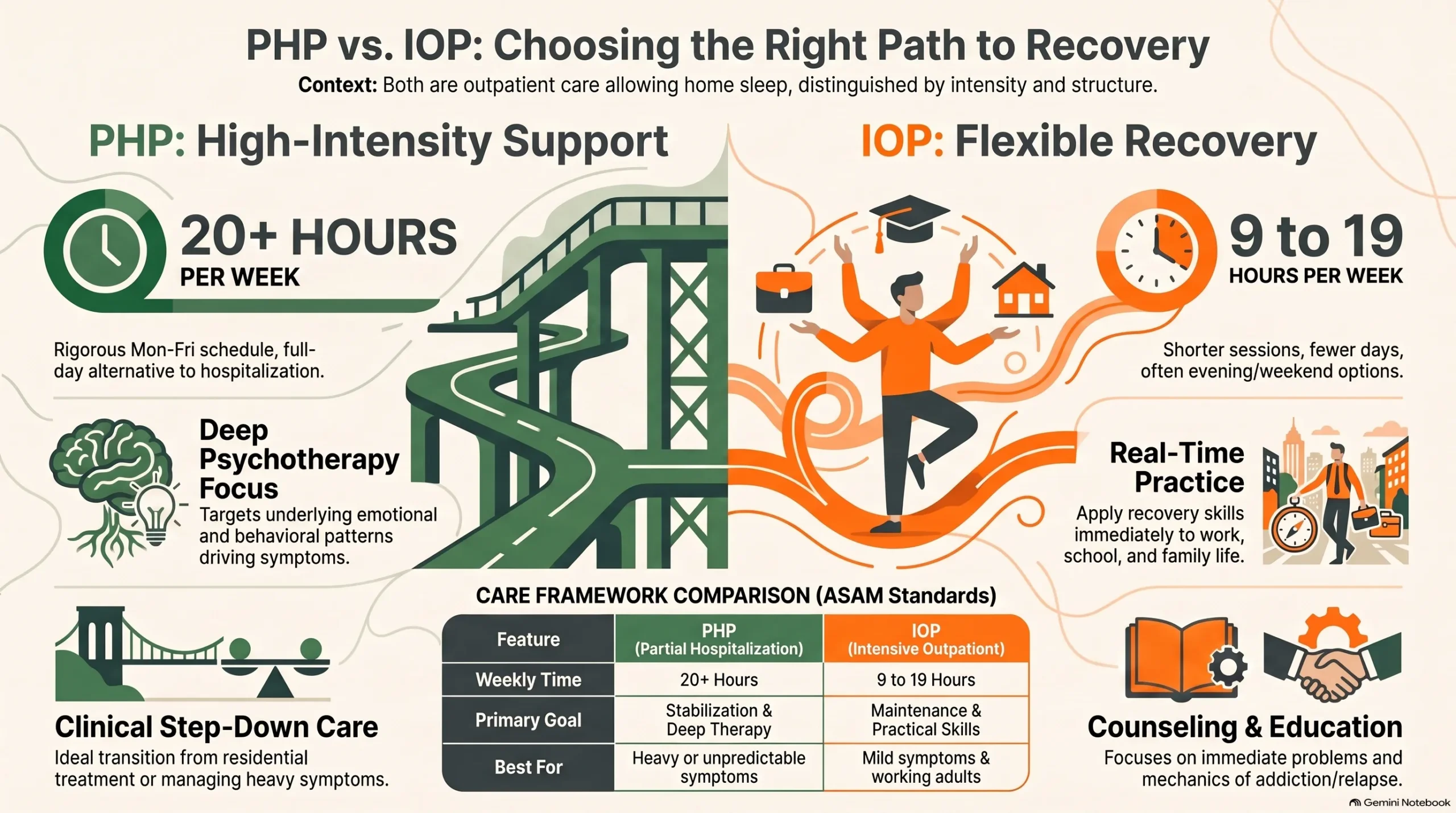
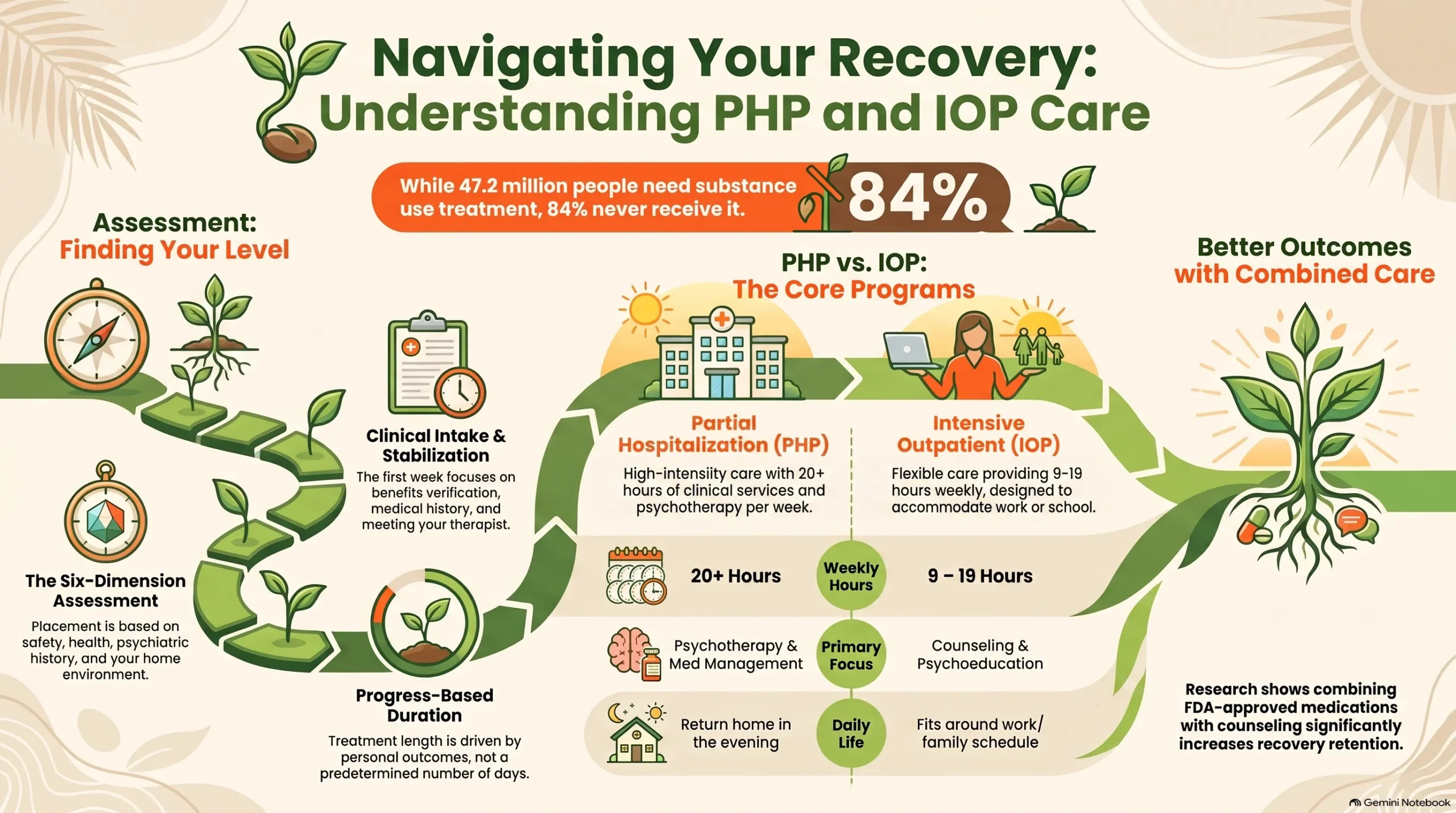
Under the American Society of Addiction Medicine (ASAM) framework, PHP-level care provides at least 20 hours of clinical services per week with a greater focus on psychotherapy, while IOP provides 9 to 19 hours built mainly around counseling and psychoeducation [1]. The distinction is one of depth: psychotherapy works on the patterns underneath the substance use, counseling works on the problems in front of you now, and psychoeducation teaches you how addiction, withdrawal, and relapse actually work.
PHP is an intensive, structured outpatient program offered as an alternative to psychiatric hospitalization [2]. IOP sits one step below that: more support than weekly therapy, less than a full day of care.
What Is a Partial Hospitalization Program (PHP)?
PHP is the most intensive level of care available without staying overnight. Programming usually runs Monday through Friday and takes up most of the day.
A typical week combines group therapy, individual sessions, life skills workshops, and medication management, with a clinical team close enough to your progress to adjust the plan quickly when something shifts.
PHP tends to fit when symptoms are heavy or unpredictable, when you are stepping down from inpatient or residential care, or when weekly therapy has not been enough. Your home environment still needs to be safe and stable, because you return to it every evening.
What Is an Intensive Outpatient Program (IOP)?
IOP delivers a minimum of nine hours of structured services each week for adults [3].
Sessions are shorter and spread across fewer days, and many programs offer day, evening, and weekend groups so that you can keep working, studying, or caring for your family while you are in treatment [3].
That schedule gives you something a higher level of care cannot: the chance to practice recovery skills in real time, with the people and pressures already in your life [3].
The evidence is reassuring. For adults with little risk of withdrawal, manageable physical health conditions, and mild psychological symptoms, IOP outcomes are comparable to those of residential treatment [3].
PHP vs IOP: A Side-by-Side Comparison
The table below sets the two levels next to each other.
| Level of Care | Partial Hospitalization Program (PHP) | Intensive Outpatient Program (IOP) |
|---|---|---|
| Weekly hours | At least 20 hours of clinical services | 9 to 19 hours of clinical services |
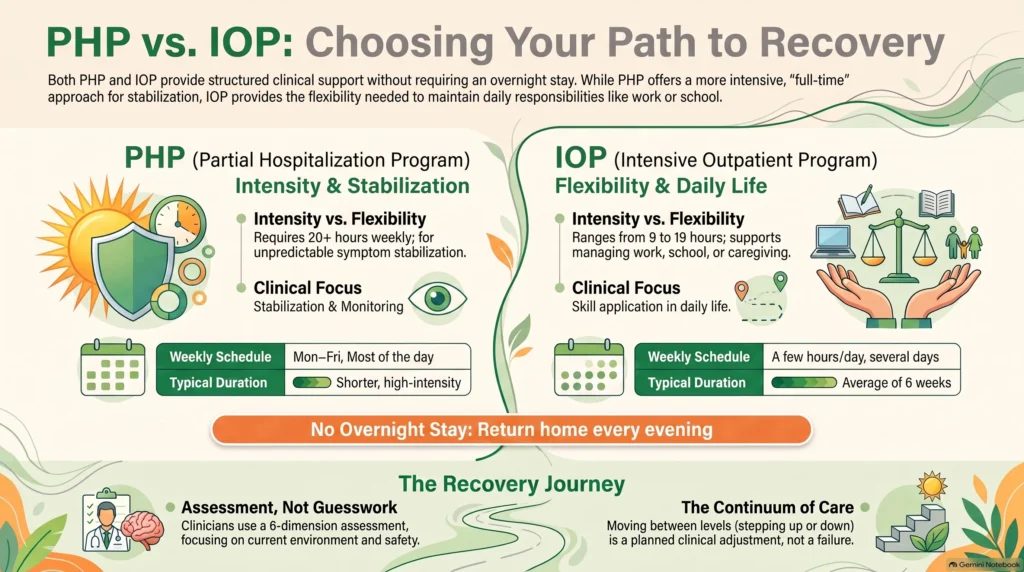
| Typical schedule | Monday through Friday, most of the day | A few hours per day, several days per week, with evening options at many programs |
| Overnight stay | No, you return home each evening | No, you return home each evening |
| Position on the continuum | Below residential care, above IOP | Below PHP, above standard outpatient therapy |
| Main focus | Stabilization, close monitoring, and intensive psychotherapy | Counseling, psychoeducation, and applying skills in daily life |
| Often fits | Heavier or unpredictable symptoms, step-down from inpatient or residential care | Stable enough to manage work, school, or caregiving alongside structured treatment |
How Your Level of Care Is Decided
The choice is not a guess. A clinician works through a structured assessment with you, and the questions are more concrete than most people expect:
- How much are you using, and when did you last use?
- Has withdrawal ever landed you in a hospital?
- Are you on any medication now?
- Is there anyone at home still using?
- Can you get here three days a week
- Does your employer know?
Your answers to those questions, not your diagnosis alone, determine where you start.
How Long Will You Be in Treatment?
There is no fixed answer, and that is deliberate. Movement along the continuum is based on your progress and outcomes rather than predetermined lengths of stay.
The average length of stay in IOP at Sprout Recovery is 6 weeks. PHP concentrates far more hours into each week, so it usually covers a shorter stretch of the calendar before you step down.
Moving Between Levels Is Part of the Plan
Neither program is designed to stand alone. IOP works best as one step within a continuum of care, and moving from more intensive to less intensive treatment improves outcomes overall.
What happens after the structured phase matters just as much. Sustained continuing care is associated with better long-term outcomes than a single short episode of treatment [4].
Stepping up is not a failure either. If symptoms intensify during IOP, moving to PHP for a few weeks is a clinical adjustment, not a verdict on you.
What Matters Most
- PHP provides at least 20 hours of structured treatment each week, and IOP provides 9 to 19 hours.
- Neither level requires an overnight stay, so you sleep at home in both.
- PHP fits heavier or less predictable symptoms and step-downs from inpatient or residential care.
- IOP fits people who are stable enough to manage daily responsibilities alongside structured treatment.
- Level of care is determined by a six-dimension clinical assessment, not by diagnosis alone.
- Both levels work best as steps within a continuum, followed by continuing care.
PHP and IOP for Adults in Fort Myers, FL
Choosing a level of care should not fall on you alone.
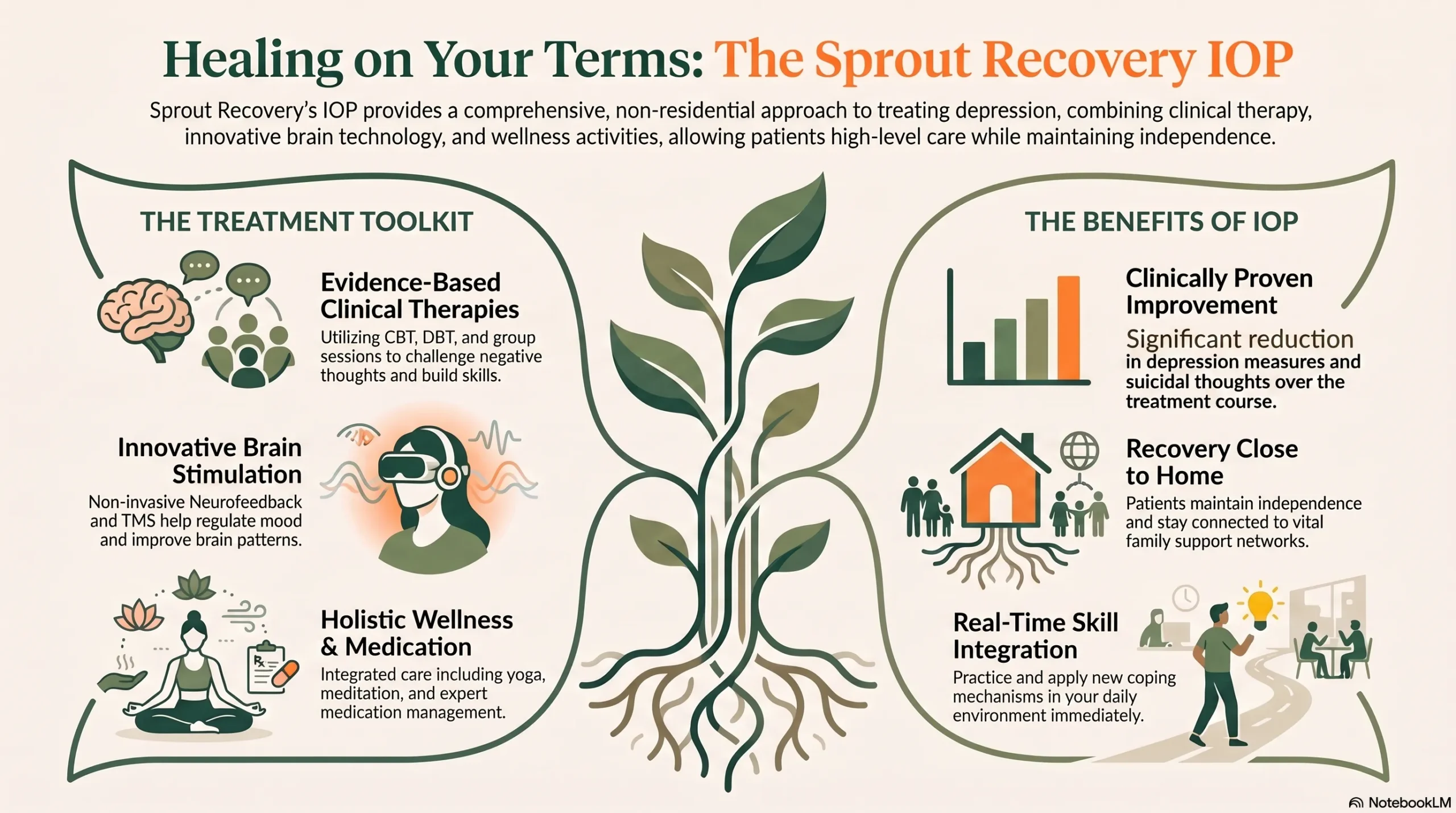
Sprout Recovery is an outpatient center in Fort Myers serving adults 18 and older across Lee County and Southwest Florida. Our Partial Hospitalization Program and Intensive Outpatient Programs treat mental health conditions, substance use disorders, and both together.
Individual therapy, group therapy, and medication management form the core of care, alongside neurofeedback. Sober living is available for those in recovery from a substance use disorder.
Call our admissions team. We will verify your benefits and talk through which level of care fits where you are right now.
Sources
[1] American Society of Addiction Medicine. n.d. The ASAM Criteria: Fourth Edition. hcpf.colorado.gov.
[2] Centers for Medicare and Medicaid Services. 2023, Nov. 2. CY 2024 Medicare Hospital Outpatient Prospective Payment System and Ambulatory Surgical Center Payment System Final Rule (CMS 1786-FC). cms.gov.
[3] Substance Abuse and Mental Health Services Administration. 2021. Clinical Issues in Intensive Outpatient Treatment for Substance Use Disorders. Advisory, Publication No. PEP20-02-01-021. samhsa.gov.
[4] McKay, J. R. 2021. Impact of Continuing Care on Recovery From Substance Use Disorder. Alcohol Research: Current Reviews, 41(1), Article 01.