

















An Intensive Outpatient Program (IOP) is a type of structured care that can help people suffering from depression. More than 4% of the world’s total population has depression [1], and in recent years, rates have increased substantially [2].
Depression can be treated. Symptoms can be managed, and people can learn skills that alleviate heavy, persistent feelings, and allow for a healthy, happy life. IOP is part of the journey toward recovery. Here’s what it is, how it works, and who it’s for.
What Is IOP?
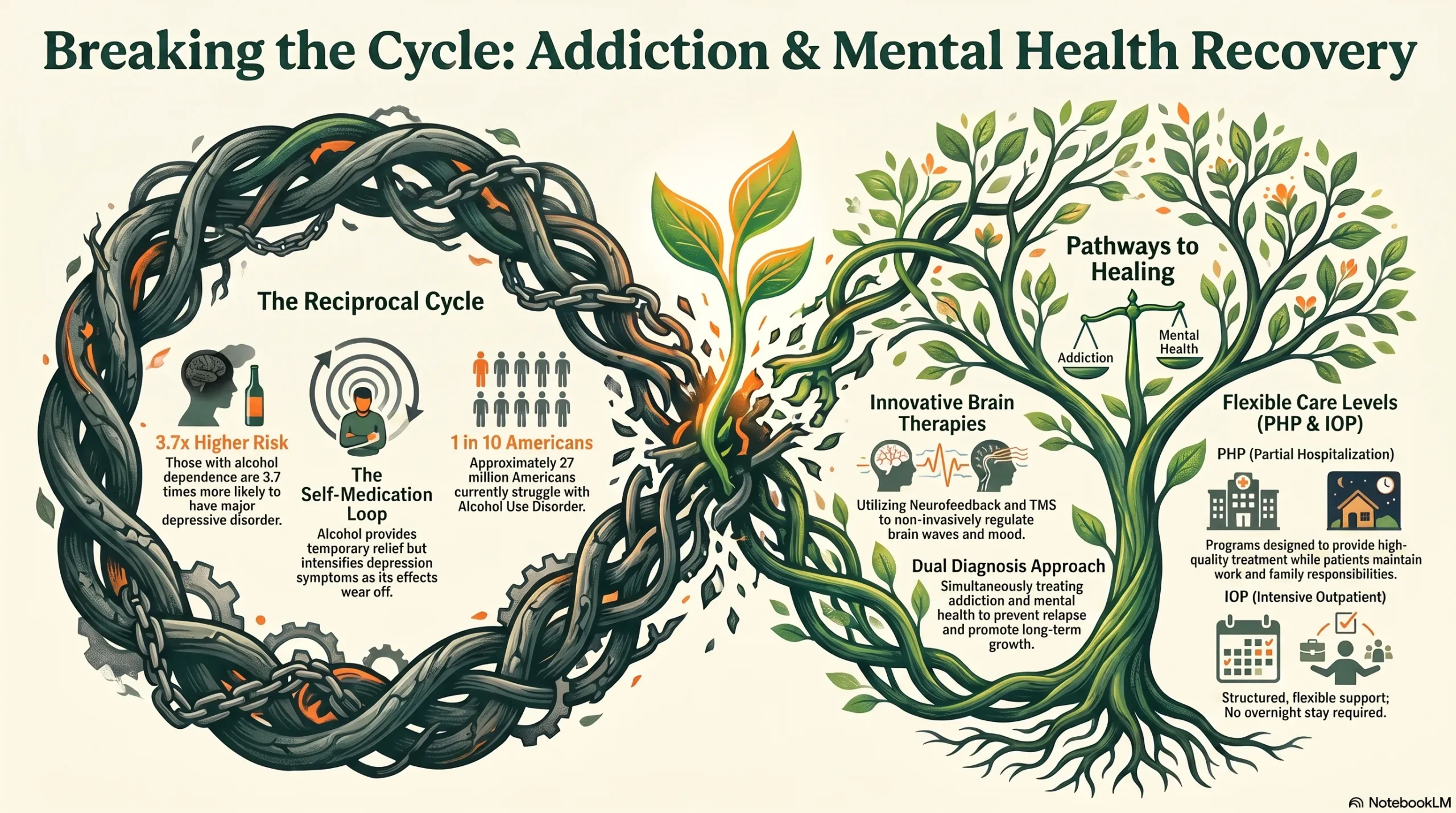
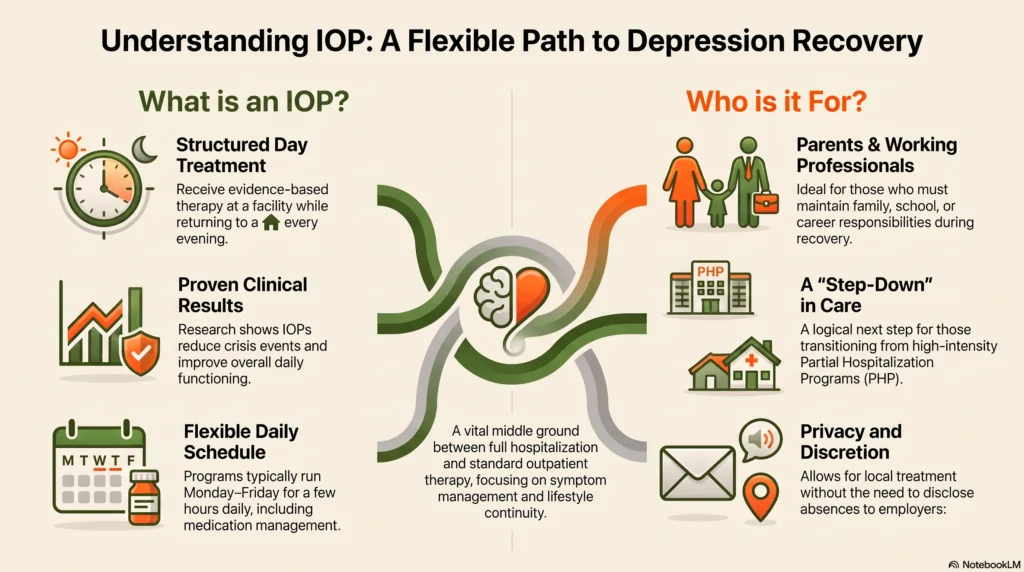
An IOP is a type of program to treat depression, as well as other mental health disorders and substance use disorders. With an IOP, people receive care at a facility but are allowed to return home in the evening. This flexibility is a change from Partial Hospitalization Programs (PHP), which come before IOP on the continuum of care and require people to stay overnight.
An IOP typically runs from Monday to Friday, for a few hours a day. Sessions include evidence-based therapies, medication management, and wellness activities.
Research shows that IOPs can reduce crisis events, treat symptoms, and improve overall functioning among people with depression. It can also help lower readmissions [3]. The more flexible nature of IOPs has been shown to produce therapeutic effects for people in care, too [4].
Who Is IOP For?
An IOP is available for anyone who needs support for mental health or addiction. IOP lends itself well to people with depression who find that they can carry out daily tasks but need treatment to address deeper imbalances.
The people who most commonly seek an IOP are those who:
Recently finished a PHP
Are parents or caregivers
Are employed or have school responsibilities
Prefer treatment close to home but with greater discretion
For people who have finished a PHP, IOP is a step down in care. It often means that the person is stable enough to live independently but still requires regular support. Transitioning to IOP from PHP is a sign of progress.
People who have a family or who are working or studying also tend to choose an IOP. Because attendees can return home in the evening, and the hours of care are less demanding than a PHP, people have time to continue their responsibilities outside of treatment. Naturally, recovery is a priority, but people like the sense of autonomy and continuity that an IOP brings.
Another demographic that IOP speaks to is people who want treatment close to home while still being discreet. An IOP allows people to attend sessions and leave afterward, so they don’t have to disclose to an employer or others where they are. For example, Sprout Recovery is based in Fort Myers, and people can easily access our center from the city, stay within a familiar setting, and still maintain their privacy.
How Does IOP Treat Depression?
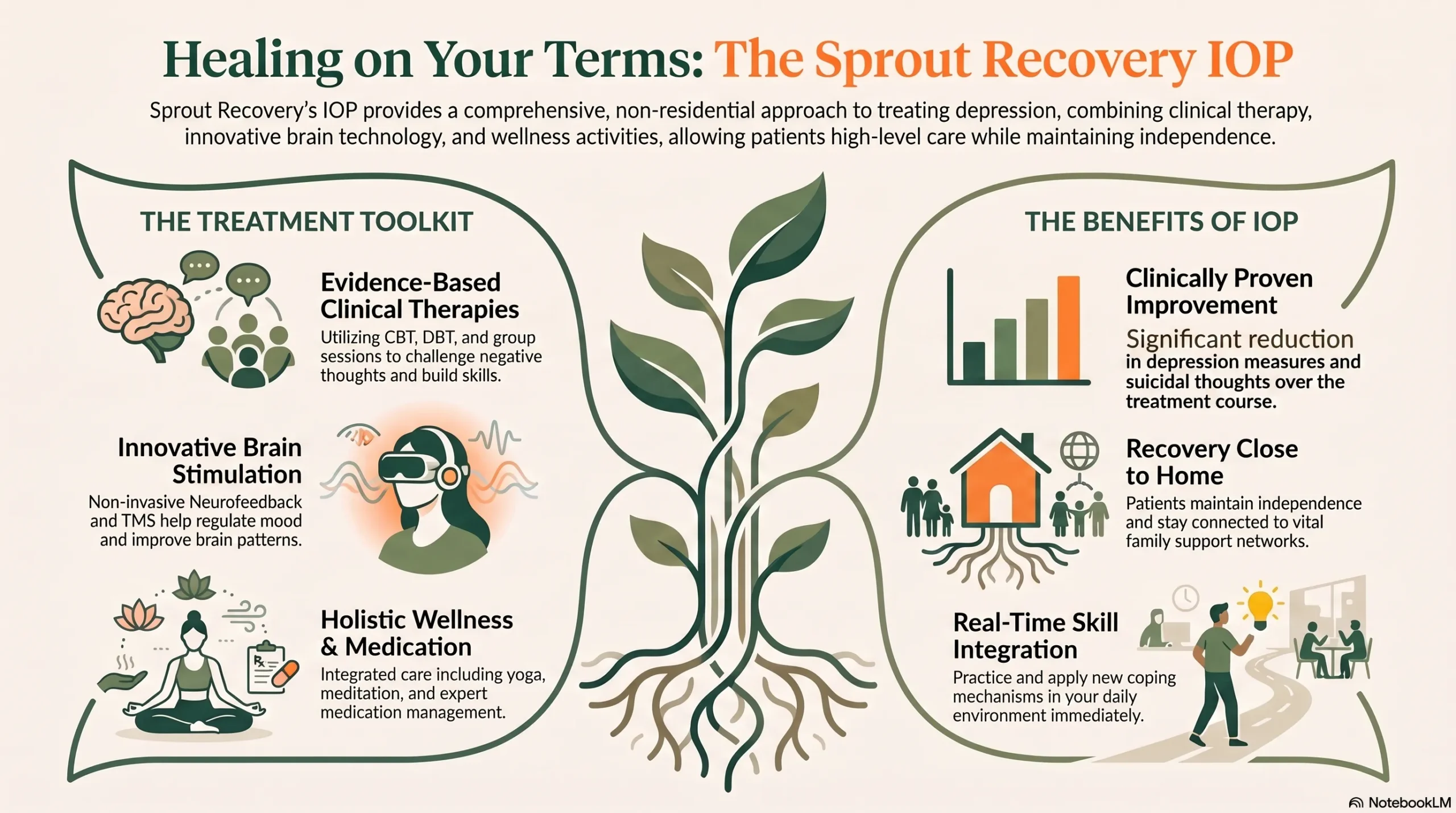
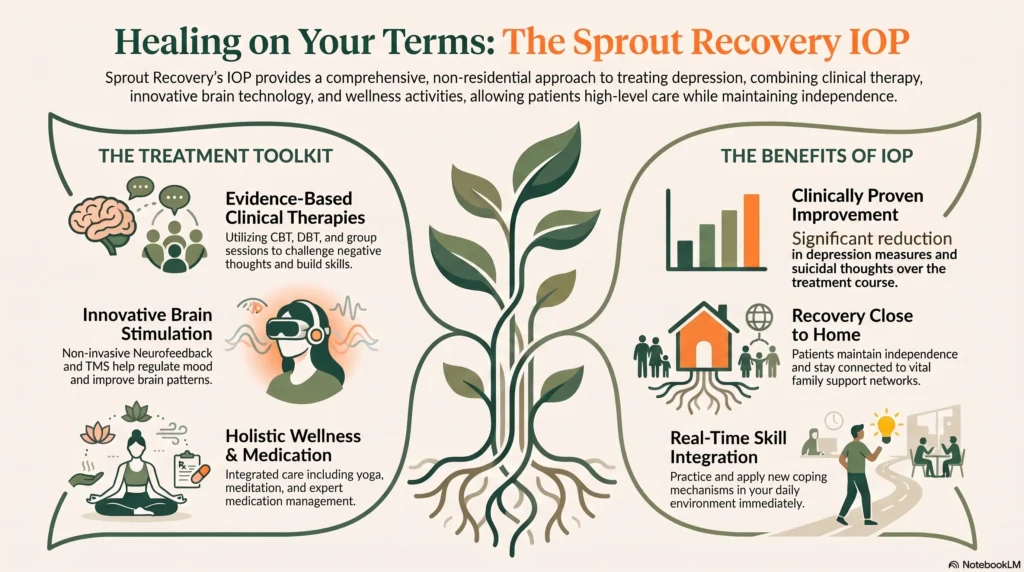
IOP is comprehensive and combines a variety of approaches to effectively treat depression; these include evidence-based therapies such as Cognitive Behavioral Therapy (CBT), Dialectical Behavioral Therapy (DBT), and group therapy. Therapy sessions are designed to help people describe how their depression manifests, to challenge negative thoughts, and to develop skills that forge new neural pathways.
At Sprout Recovery, we also have neurofeedback and Transcranial Magnetic Stimulation (TMS) as part of our IOP. Neurofeedback uses sensors to measure brainwaves and identify brain patterns that can improve mood. TMS uses magnetic pulses to stimulate nerve cells in the brain and help regulate mood. Both are non-invasive procedures.
Treatment in an IOP may also involve medication management. Many people take antidepressants as part of their care plan, and licensed professionals working in an IOP can monitor the impact. They may increase or lower the dosage as necessary, or recommend changing medication that isn’t effective.
Wellness activities are a component of IOP for depression. Yoga, meditation, and mindfulness practices promote good physical and mental health. Exercise, in particular, has been associated with better outcomes for people with depression [5].
What Are The Benefits of an IOP?
People who enter IOPs for depression show significant improvement over the course of treatment, specifically a reduction in the measure of depression, suicidal thoughts, and behaviors [6].
Alongside being highly effective, IOPs have a number of appealing benefits. The flexibility is a large one, as people can go home in the evening, which builds a sense of independence and keeps them close to their support networks. Social support is essential to treat depression, and the more connected people are to those who provide motivation, the more likely they are to engage with and finish the program.
Being closer to home during an IOP typically brings mental peace for people because they don’t have to prepare and adapt to a new environment. Having a short commute and a community nearby is a source of comfort. At the same time, people can integrate skills they learn from the IOP into their home life in real time, seeing the impact of their work and their progress as it happens.
Some centers may welcome family members to attend IOP sessions to help improve relationship dynamics and incorporate support systems more closely with care. Many people who attend IOPs appreciate this more integrated nature of treatment.
Feel Better. Join Our Flexible IOP at Sprout Recovery, FL
We guide people struggling with mental health. We have a team of licensed experts who tailor our IOP according to your history, needs, and hopes. All of our care comes from evidence-based therapies and is designed to help you develop healthy thought patterns and behaviors.
We use both traditional and innovative approaches to facilitate your healing. We integrate traditional strategies such as Cognitive Behavioral Therapy (CBT) with modern techniques such as neurofeedback and Transcranial Magnetic Stimulation (TMS). We also offer medication management to monitor and adjust your dosage as necessary.
Our Intensive Outpatient Program runs from our center in Fort Myers, FL. The space is calm and judgment-free. No matter where you are in your recovery journey, we can help you find the physical and mental stability you deserve. Contact our admissions team.
Sources
[1] World Health Organization. (August 2025). Depressive disorder (depression). who.int.
[2] Hidaka, B. (January 2012). Depression as a disease of modernity: explanations for increasing prevalence. Journal of the International Society for Affective Disorders.
[3] Evans-Chase, M. (April 2023). Treating Depression in Adolescents and Young Adults Using Remote Intensive Outpatient Programs: Quality Improvement Assessment. JMIR Formative Research.
[4] Falabella, G. et al. (August 2022). CBT/DBT-Informed Intensive Outpatient Treatment for Anxiety and Depression: A Naturalistic Treatment Outcomes Study. Cognitive and Behavioral Practice.
[5] Noetel, M. et al. (February 2024). Effect of exercise for depression: systematic review and network meta-analysis of randomised controlled trials. The BMJ.
[6] Bero, K. et al. (September 2025). Treatment Outcomes of an Adolescent Intensive Outpatient Program for Depressed and Suicidal Youth. JAACAP Open.