

















Depression and alcohol are linked. Alcohol addiction can lead to depression, and having depression can make someone more likely to drink alcohol.
Alcohol is a depressant, which means that it slows down processes in the brain and the central nervous system [1]. Long-term and high consumption of alcohol affects your brain chemistry and mental health.
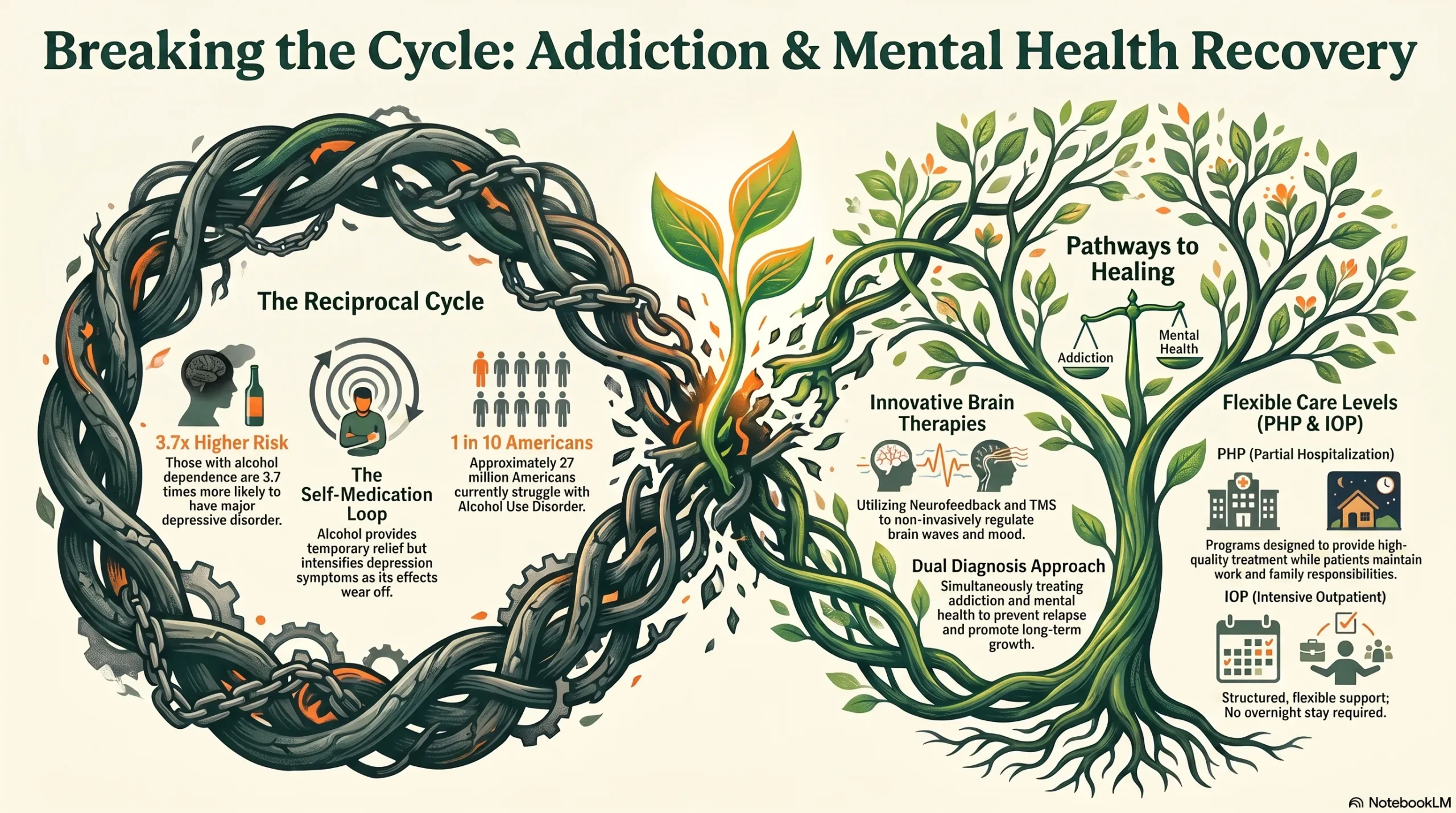
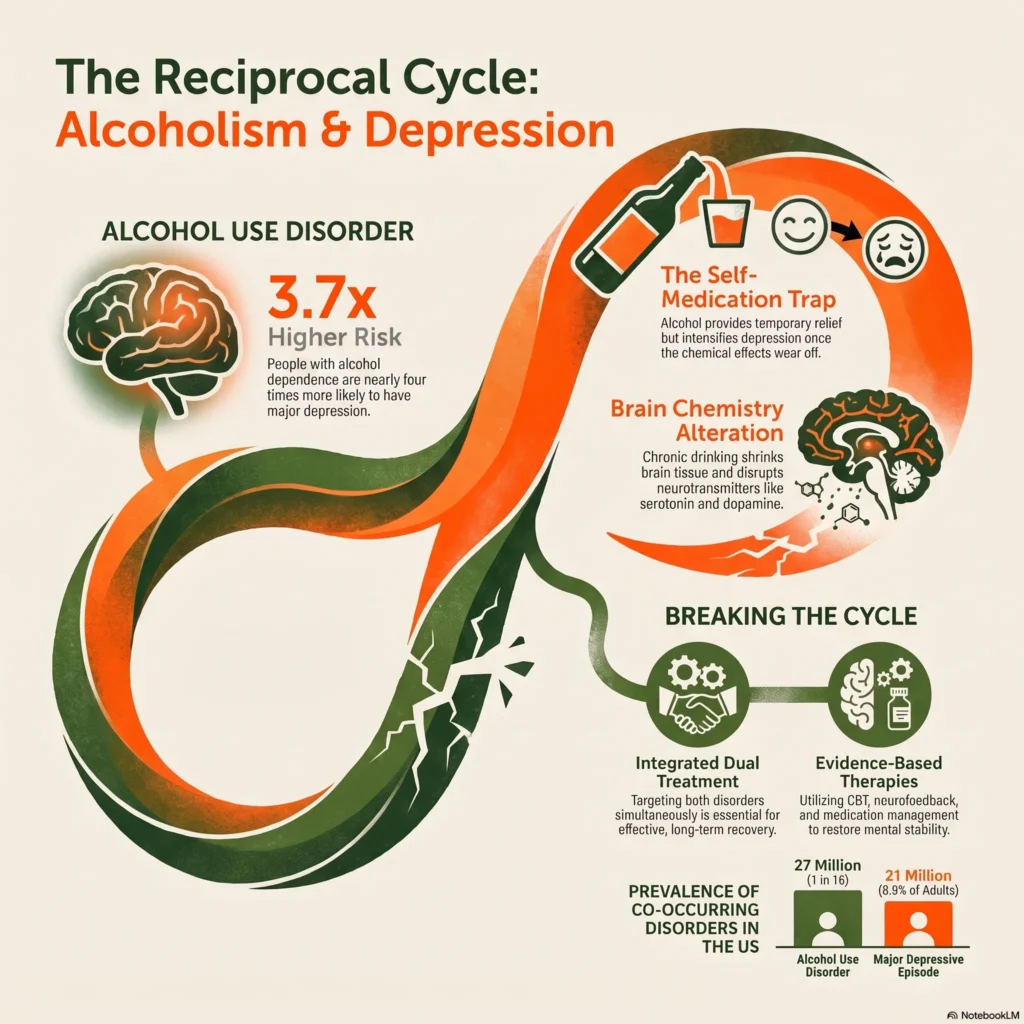
Research shows that people with alcohol dependence are 3.7 times more likely to have major depressive disorder [2]. And people with depression may drink higher volumes of alcohol, more often, as a coping mechanism for their symptoms.
The right treatment can break the connection between depression and alcohol and help people overcome both disorders.
Alcohol and Depression: A Bilateral Relationship
Both alcohol abuse and depression are common. 27 million Americans have an AUD — the equivalent of 1 in 10 people [3]. Meanwhile, around 21 million people in the US have had at least one major depressive episode — 8.3% of all adults in the country [4].
Having either an Alcohol Use Disorder (AUD) or depression raises the risk of developing the other disorder [5]. Studies have even shown that in some cases, having depression has predicted an AUD, and having an AUD has predicted depression among individuals [5].
It’s important to note that while there is a connection between alcohol and depression, depression is not only caused by alcohol abuse. Nor does alcohol abuse automatically mean that someone has depression. The two increase the risk of the other developing but are not always causal.
How Can Depression Lead to Alcohol Addiction?
Depression is a mood disorder that causes persistent feelings of sadness and hopelessness and impacts a person’s ability to function on a daily basis. Symptoms of depression include:
- Ongoing low mood and irritability
- Loss of pleasure in things that once brought joy
- Difficult concentrating
- Feelings of worthlessness or guilt
- Fatigue
- Changes in appetite and sleep
Depression can lead to alcohol addiction because people may use alcohol to self-medicate and get temporary relief from symptoms. Alcohol increases gamma-aminobutyric acid (GABA), a neurotransmitter that produces feelings of calm. It also decreases glutamate, an excitatory neurotransmitter that slows down thoughts.
As alcohol wears off, the body has to restore its chemical balance, and during this time symptoms of depression can feel more intense. The hangover due to excess alcohol consumption can also worsen depression symptoms.
Short-term relief from depression can motivate people to continue drinking, despite the aftereffects. They can fall into a cycle of addiction where they drink to temporarily feel better, only to feel worse later, and then drink again to feel better. The more that they drink, the higher their tolerance becomes, so they need larger volumes of alcohol to alleviate their depression symptoms.
Age and gender are factors in the link between depression and alcoholism. Children with depression are more likely to abuse alcohol when older. Teens who have experienced depression are twice as likely to start drinking as their peers who haven’t experienced depression. Women with a history of depression are twice as likely to start drinking heavily compared to men [6].
How Can Alcohol Addiction Lead to Depression?
Depression is one of the most common co-occurring disorders with AUD [7].
Alcoholism changes the brain. It shrinks brain tissue and alters serotonin and dopamine neurotransmitters, which regulate the brain’s mood and reward systems. When these systems are disrupted, a person is more susceptible to emotional dysregulation, including depression.
Excessive drinking can result in feelings such as anger and anxiety. It can also cause a person to behave in uninhibited ways that may fuel a sense of regret once the effects of alcohol pass. These chemical and social negative effects can trigger depressive states in people with the condition. In fact, alcohol use has been associated with greater depressive symptoms among individuals who are not undergoing treatment for depression [8].
There are no clear figures around alcohol-induced depression diagnoses, but one study found that more than 25% of patients undergoing treatment for an AUD had experienced a substance-induced depressive episode in their lifetime [2].
What is known is that alcohol heightens the possibility of becoming depressed. More than one in three people with an alcohol use disorder has experienced episodes of intense depression and/or severe anxiety [9].
Can Alcohol and Antidepressants Be Mixed?
Antidepressants are the medications prescribed to manage the symptoms of depression. It’s not recommended to combine alcohol and antidepressants. Doing so can nullify the effects of antidepressants and make depressive symptoms worse. Because depression and AUD are linked, it can be difficult for people experiencing both to take antidepressants safely and effectively.
The possible outcomes of mixing alcohol and antidepressants include:
- Increased feelings of depression
- Exacerbated side effects
- Increased blood pressure
- Difficulty thinking clearly or staying focused
- Drowsiness
Anyone who is taking antidepressants and has an AUD should seek medical support to recover.
Dual Treatment for Depression and Alcohol Addiction
As depression and alcohol addiction are connected, treatment should also be connected. Depression and alcohol addiction often share symptoms, so these can be targeted in care while also doing deeper work to address the causes, triggers, and influential factors of the conditions on one another.
Treatment can also ensure that people experiencing either depression or alcohol addiction are monitored for signs of co-occurring disorders. By getting help early, the risk of developing an alcohol addiction from depression, and vice versa, can be significantly lowered.
Medically-guided detox, evidence-based therapies, medication management, and aftercare programs are just some of the ways that treatment can help manage and overcome depression and alcohol addiction. It is possible to heal from each condition and to live a healthy, happy life.
Recover From Depression And Alcoholism at Sprout Recovery, FL
We guide people as they recover. We have a team of licensed experts who tailor behavioral treatment plans according to your history, needs, and hopes. All of our care comes from evidence-based therapies, including individual therapy and group therapy to help you understand the root of your alcohol addiction and to develop healthy thought patterns and behaviors.
We use both traditional and innovative approaches to help you heal in the most comprehensive way, integrating strategies such as Cognitive Behavioral Therapy (CBT) with neurofeedback and Transcranial magnetic stimulation (TMS). We can also provide medication management where needed to monitor the dosage and effectiveness of antidepressants.
Our Partial Hospitalization Program (PHP) and Intensive Outpatient Program (IOP) run from our center in Fort Meyers, FL. We take care to create a judgment-free space where you can find the physical and mental stability you deserve.
Start living a healthy life again. Contact our admissions team.
Sources
[1] Gan, G. et al. (November 2014). Alcohol-Induced Impairment of Inhibitory Control Is Linked to Attenuated Brain Responses in Right Fronto-Temporal Cortex. Biological Psychiatry.
[2] McHugh, R. Weiss, R. (October 2019). Alcohol Use Disorder and Depressive Disorders. Alcohol Research.
[3] National Institute on Alcohol Abuse and Alcoholism. (August 2025). Alcohol Use Disorder (AUD) in the United States: Age Groups and Demographic Characteristics. niaaa.nih.gov.
[4] National Institute of Mental Health. Major Depression. (July 2023). nimh.nih.gov.
[5] Kuria, M. et al. (January 2012). The Association between Alcohol Dependence and Depression before and after Treatment for Alcohol Dependence. ISRN Psychiatry.
[6] WebMD. (May 2026). Alcohol and Depression. webmd.com.
[7] National Institute on Alcohol Abuse and Alcoholism. (September 2025). Mental Health Issues: Alcohol Use Disorder and Common Co-occurring Conditions. niaaa.nih.gov.
[8] Ramsey, S. et al. (January 2005). Alcohol Use Among Depressed Patients: The Need for Assessment and Intervention. Professional Psychology: Research and Practice.
[9] Schuckit, M. (1996). Alcohol, Anxiety, and Depressive Disorders. Alcohol Health and Research World.